Starting rates do not price every requirement
Kavushion lists Website from Rp3m and App / Custom System from Rp15m. These are starting rates, not fixed prices for every project. A final quote needs agreed pages, functionality, content and integrations. The website listing includes a landing page or company profile, responsive layouts, copy structure and calls to action, basic SEO and analytics, and a contact route. It does not specify your page count, languages, review rounds or chosen tools. Ask for those details in the proposal rather than assuming the entry price covers a complete store or operational system.
Separate information pages from system work
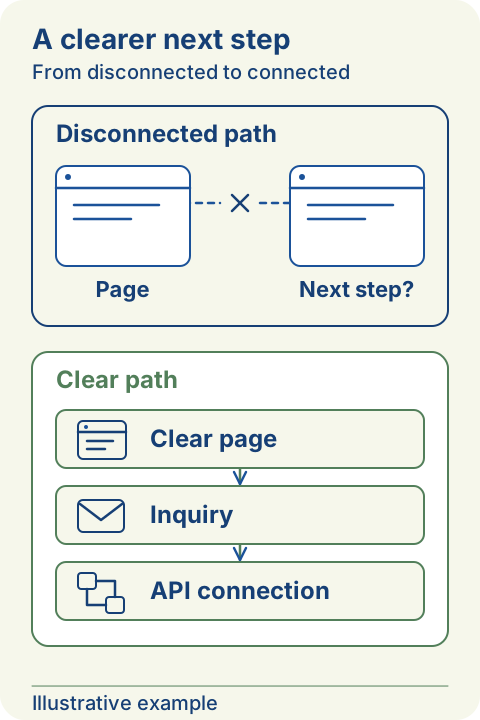
Choose scope around what visitors and staff must do. A site explaining a service and opening a contact route is different from a system that stores orders, controls user roles or synchronizes inventory. Describe each journey from the user's first action to the staff handoff. Name integration destinations, transferred data and what should happen when a connection fails. Screen count alone cannot describe that work. If the offer is still changing, begin with clear information pages and postpone features without an agreed process owner. Mark launch requirements separately from later possibilities.
Read the fuller explanation
Hypothetical example: a furniture supplier needs a catalog and quote requests, not online payment. The first brief can cover product browsing and inquiries. Customer-specific pricing, live stock and checkout remain separate decisions. This is a scope example, not a client project or an add-on quote.
Prepare the inputs that make quotes comparable
Bring a page list with a purpose for each page, required languages, sample content and the person approving copy and images. Distinguish ready material from writing, translation, photography or migration still needed. Include the existing site address and connected services, without passwords or customer records. Explain what you like about design references: readable product details are a clearer requirement than a request to copy another website. State your budget ceiling and internal dependencies. If a date matters, explain why so feasibility can be discussed; a requested date is not an agreed delivery schedule.
Separate the build from recurring costs
For budgeting, treat domains, hosting, paid licenses, API usage, payment-provider charges and maintenance as separate unless the proposal explicitly includes them. These are items to clarify, not published add-on tariffs. For recurring costs, ask who owns the accounts, pays renewals and handles a cancelled subscription. Full copywriting, translation, migration, ongoing SEO campaigns and additional integrations also need an explicit scope. Basic SEO and analytics in the package listing do not establish a monthly campaign or already-active measurement. Ask which tools and configuration are included, who manages them, and where support ends after handover.
Evaluate the proposal by acceptance criteria
Compare proposals against the same requirements and request acceptance criteria for each deliverable. Agree which pages and languages are delivered, which journeys are tested, review rounds, content responsibilities and how scope changes are handled. A contact form that sends a message and a button that opens an email draft require different checks; specify the intended behavior. Include mobile review and handover instructions. If an existing site already meets part of the need, ask whether a targeted repair would be sufficient. Choose work you can inspect and maintain rather than an unsupported promise of sales.
Before your next conversation
- Separate information pages from journeys that store or change data.
- Mark launch requirements and features that can wait.
- List languages, available content and approval owners.
- Confirm recurring costs, account ownership and payment responsibilities.
- Request acceptance criteria, review limits and handover details.
- Compare the same scope across proposals, not starting prices alone.