Service businesses
Explain your expertise, services, and process so prospects can assess the fit.
Marketing & SEO
A page can look ready yet be hard to crawl or understand. We review technical access, search intent, and the route from a visit to an enquiry.
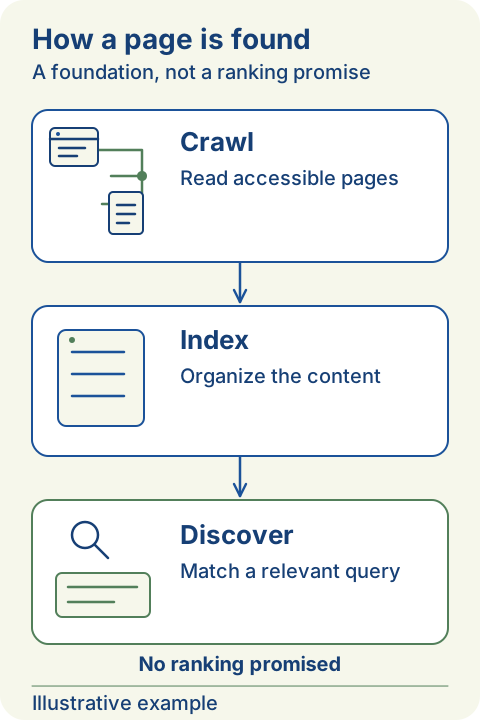
Built around your business
A blocked page, duplicate URL, or unclear service can go unnoticed in a redesign. Check what search engines can reach and what visitors can understand.
Explain your expertise, services, and process so prospects can assess the fit.
Organise categories, product information, and content that helps purchase decisions.
Build pages around specific needs and guide visitors toward relevant conversations.
Adjust a few inputs. Use the result to start a scope discussion.
Self-assessment, not a crawl or technical audit. No ranking guarantee.
Needs checking
Known “No” answers become priorities in checklist order. “Not sure” stays unverified. This checklist does not inspect your website, score technical health or predict rankings.
Your answers stay in this page. Nothing is sent or saved.
Our approach
Prioritize crawlability, indexability, and useful content before publishing more pages.
Review page structure, metadata, headings, indexing, and performance. Priorities follow your website's condition.
Map search intent, service page structure, and content briefs that answer customer questions.
Clarify offers, calls to action, and forms. Measurement helps identify the next improvement.
From audit to action
Goals, audience, services, and the current website.
Audit findings, search needs, and priority pages.
Technical fixes, content structure, and calls to action within scope.
Review available data and agree on the next iteration.
No. Rankings depend on competition, content quality, website condition, and search engine changes. We focus on clear, reviewable work.
Yes. We review its technical condition and content first to identify practical improvements for your platform.
It depends on scope. Audits, content briefs, page copy, and implementation can be discussed separately to clarify deliverables and costs.
We agree on goals and a baseline, then review search visibility and relevant enquiries where tracking is available. Traffic alone is not the only measure.
Costs, technical choices and readiness—start with your needs.
Topic: website technical SEO audit services
Start with crawler access, indexing status, URL structure, metadata, rendered content, and the performance of important pages. Kavushion can organise findings and prioritised fixes around agreed access and scope; the service page self-assessment is not a live crawler, an automated audit report, or a ranking guarantee.
Explore the related topicTopic: website readiness for Google AI search
For supporting links in Google Search AI features, a page must be indexed and eligible to appear with a snippet. Prioritise crawl access, useful text, internal links, and structured data matching visible content; no special AI schema or new AI file is required, and eligibility does not guarantee selection as a source.
Explore the related topicTopic: why website pages are not indexed by Google
Inspect the exact URL with URL Inspection when Search Console access is available, then review server responses, noindex, robots.txt, canonical signals, and renderable content. Distinguish an undiscovered page from an inaccessible page or one not selected for indexing; fixes or indexing requests do not guarantee that Google will index it.
Explore the related topicTopic: SEO service cost for a custom website scope
Costs should reflect the platform, priority pages, content needs, data access, and who will implement the fixes. Separate the audit, briefs, writing, implementation, and monitoring in a Kavushion proposal so deliverables and timelines are clear; a self-assessment cannot establish a quote, and fees do not guarantee rankings or enquiries.
Explore the related topicTopic: robots.txt noindex and nosnippet differences
robots.txt controls crawl access, not reliable removal of a URL from the index; a crawler must be able to read noindex for it to take effect. nosnippet limits previews rather than automatically removing a page from the index, while data-nosnippet limits specific sections; choose controls deliberately and verify after recrawling.
Explore the related topicTopic: XML sitemap for website page discovery
A sitemap helps search engines discover URLs you want surfaced, particularly when navigation makes pages difficult to find. Include indexable canonical URLs and accurate modification dates where available, then check access and internal links; sitemap submission is a discovery hint, not a guarantee of crawling, indexing, or an appearance date.
Explore the related topicTopic: canonical and hreflang for multilingual websites
Canonical identifies a preferred URL among similar pages, while hreflang describes language or regional equivalents. For distinct translated pages, review each version's canonical and reciprocal alternate links; Japanese uses the language code ja even when the route uses jp, and these signals do not guarantee which version will always appear.
Explore the related topicTopic: JavaScript SEO rendered HTML content
Compare the initial HTML and rendered output to confirm that primary text, headings, and important links are available without login or mandatory interaction. Check script failures, blocked resources, and crawlable links with href attributes; a page looking correct in your own browser does not prove a crawler receives the same content.
Explore the related topicTopic: SSR versus static rendering for website SEO
SSR and static rendering can expose important content in initial HTML, but the choice depends on update frequency, personalisation, caching, and operating costs. Review page requirements and actual rendered output before changing architecture; client rendering also needs access checks, and no rendering method automatically guarantees higher rankings.
Explore the related topicTopic: schema markup matching website page content
Choose structured data that genuinely describes the page, such as an organisation or product when the relevant information is available and verifiable. Match properties to visible text, avoid invented reviews or prices, and validate implementation; valid markup does not guarantee enhanced search appearance, rankings, or selection as an AI answer source.
Explore the related topicTopic: mobile website usability for SEO
Test text readability, control sizes, navigation, forms, and primary content on small screens, using real devices where possible. Ensure the mobile version retains important information and avoids obstructive overlays; prioritise barriers on the visitor's path to an enquiry rather than assuming a responsive layout alone proves SEO quality or conversion performance.
Explore the related topicTopic: website Core Web Vitals measurement
Distinguish real-user field data from laboratory tests, then examine LCP, INP, and CLS for relevant pages and devices. Field data may be unavailable for a particular URL; use controlled tests for diagnosis and measure again after fixes, without claiming actual scores or ranking gains from a self-assessment illustration.
Explore the related topicTopic: search intent mapping for business service pages
Group needs by customer problem, decision stage, and services actually offered, then map them to the most suitable pages. Answer questions about scope, process, limitations, and next steps; keyword and AI-question lists are curated candidates requiring validation, not evidence of search volume, popularity, or guaranteed traffic.
Explore the related topicTopic: SEO for online store product and category pages
Category pages help shoppers compare options, while product pages explain specifications, availability, and verifiable purchase information. Review navigation, filter URLs, duplicate variants, and links to important products; use helpful descriptions rather than repeated filler, and align changes with platform capabilities and the agreed implementation scope.
Explore the related topicTopic: SEO redirect plan for website migration
Inventory old URLs, identify relevant replacements, and plan permanent redirects for pages that genuinely move. Update internal links, canonical signals, hreflang, and sitemaps, then check response codes and access after launch; avoid sending every old URL to the homepage and plan monitoring because visibility changes can still occur.
Explore the related topicTopic: fixing duplicate pages and thin SEO content
Compare each page's purpose, unique information, and visitor needs before making changes; a short page is not automatically unhelpful. Consolidate duplicates without distinct purposes, improve necessary pages, and choose canonical signals for appropriate variations; decide redirects or removal based on the URL's function, not simply a target for fewer pages.
Explore the related topicTopic: website content maintenance for SEO
Prioritise important pages with changed service information, broken links, outdated instructions, or unanswered customer questions. Use search and enquiry data where available alongside editorial review, then assign owners and review schedules; changing a date without a substantive update is not a substitute for accurate, useful content.
Explore the related topicTopic: measuring SEO traffic and relevant enquiries
Agree on goals and a baseline, then relate available search data to page behaviour and relevant enquiries where tracking is permitted. Distinguish button clicks, opened email drafts, and enquiries actually received; explain attribution, consent, and data-access limitations so traffic figures are not presented as evidence of revenue.
Explore the related topicTopic: SEO titles and meta descriptions for service pages
Write a specific title and concise description of the page's content, value, and scope without stuffing keywords. Keep them consistent with headings and main text, then review actual available search appearance; Google can generate different title links or snippets, so a particular length does not guarantee complete display, clicks, or rankings.
Explore the related topicTopic: descriptive image alt text for websites
Describe an image's meaning or function in the page context instead of adding an unrelated keyword list. Decorative images generally use empty alt text, while informative images need appropriate descriptions; important service information should also exist as page text, and alt text must not invent results or client evidence.
Explore the related topicTopic: SEO versus paid search for service businesses
Compare urgency, budget, page readiness, customer needs, and the ability to measure enquiries before selecting channels. Ads buy placement through advertising systems, while SEO improves organic search eligibility and relevance; both still need a clear offer, and advertising spend does not purchase organic rankings or guarantee qualified enquiries.
Explore the related topicTopic: backlink quality and SEO manipulation risks
Review source relevance, editorial context, and why a link helps readers rather than relying only on counts or third-party scores. Avoid link schemes intended to manipulate rankings and focus on business information worth referencing; an audit can discuss risks without promising backlink packages or ranking gains.
Explore the related topicTopic: SEO outcome expectations and improvement monitoring
Agree on priority pages, findings to investigate, changes to implement, task owners, and review checkpoints based on available data. Separate completed work from search-engine responses and enquiry changes; competition, recrawling, and system changes can affect outcomes, so reporting should explain evidence and limitations rather than promise a ranking date.
Explore the related topicTopic: crawler access after website deployment behind a CDN
Check public URL responses, security challenges, access limits, robots rules, and noindex headers that may remain from staging. Review CDN configuration and available logs with the hosting team without disabling security wholesale; confirming technical access is a diagnostic step, not evidence that a page is already indexed or selected by AI search.
Explore the related topicYour next step
Share your URL, audience, and the pages that matter. We will identify a practical first audit.