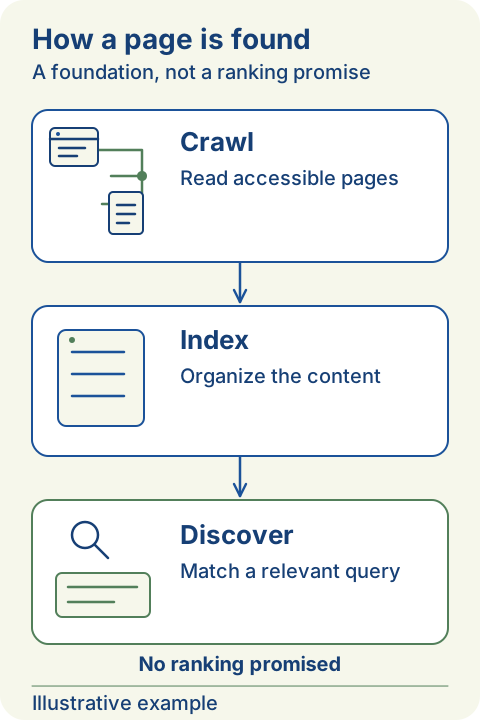
Separate indexing from ranking
A technical SEO audit should check whether important pages can be discovered, accessed and processed for search before investigating their rankings. Indexing and ranking are different: inclusion in Google's index does not establish a position for a particular query. In Google Search Console, inspect selected URLs and distinguish the indexed-page report from a live URL test. A successful live test does not guarantee indexing. This checklist is not an audit of your website. Start with essential service pages, the contact page and examples of each page type. If Search Console access is unavailable, record that limitation rather than inferring index status from public checks.
Check access before changing search controls
Open each selected URL and record its final destination, response status and whether the main content is available. Ask the maintainer to inspect redirects, broken internal links, robots.txt rules and noindex instructions in metadata or response headers. robots.txt controls crawling; blocking crawling is not a reliable way to remove a URL from the index. Google must crawl a page to read its noindex instruction. Do not remove every restriction to increase indexed-page counts. Account, internal-search or test pages may be intentionally excluded. Confirm each restriction's purpose with the site owner and separate observed failures from untested suspicions.
Reconcile canonical URLs, sitemaps and links
Check whether the canonical points to the intended primary URL for that content, then compare it with internal links and sitemap entries. A canonical states a preference; Google can select a different URL. A sitemap helps discovery, not proof of indexing. Look for redirected, missing or intentionally excluded pages listed as preferred URLs. For multilingual sites, review canonicals and language alternatives together rather than pointing every translation to another language's homepage. Where available, compare Google's selected canonical with the site's declared canonical in URL Inspection.
Read the fuller explanation
Hypothetical example: a campaign link opens the same service page with an extra tracking parameter. Reviewers look for a consistent preferred URL in the canonical, sitemap and navigation. A fully translated Japanese page needs a different review, not automatic consolidation into Indonesian.
Test mobile content and the reader's question
Read the page on a phone and check that service details, important images, navigation and contact controls remain usable. Google uses mobile content for indexing and ranking, so do not remove essential explanations just to shorten a layout. Record slow or difficult interactions and request technical investigation with clear test conditions; one score is not a complete diagnosis. Review the page title, main heading and body together. Do they answer the same visitor need? Compare the title's promise with the scope, limitations and evidence in the text. Technical repairs cannot replace an unwritten answer or clarify an unexplained offer.
Request evidence through to the inquiry route
Commission an audit with actionable findings: affected URLs, evidence, expected behavior, priority, an owner and a retest method. Ask whether implementation and retesting are included or separate. Test the inquiry route with agreed test details; an email draft is not a sent message. Prioritize verified obstacles on important pages and contact journeys over cosmetic score changes. Save the baseline and change log. Retest under comparable conditions and review search data when available, without attributing every traffic change to one repair. An audit does not guarantee rankings or inquiries. Migrations and issues across multiple templates may require a broader investigation.
Before your next conversation
- Select important URLs and note which reporting access is available or missing.
- Distinguish indexed status, live tests and rankings for specific queries.
- Inspect responses, redirects, robots.txt and noindex against each page's purpose.
- Reconcile canonicals, sitemap entries, internal links and language alternatives.
- Test mobile content and the inquiry route with agreed test details.
- Request evidence, priorities, implementation scope and a retest method.